

NATIONAL ARBORETUM’S SCIENCE, BEAUTY, AND IMPACT
Photo courtesy of the U.S. National Arboretum
OVERVIEW
The U.S. National Arboretum is a world-class center for horticultural research, education, and innovation. It spans 451 acres in Northeast Washington, D.C., and is administered by the U.S. Department of Agriculture Agricultural Research Service. The National Arboretum serves as both a horticultural research facility and a public garden.
For almost 100 years, the National Arboretum has played an important role in preserving germplasm, developing and introducing improved plants for the American nursery industry, bridging cultural connections through plant collections, restoring habitat, and more. Continue reading to learn more about key accomplishments that highlight the Arboretum’s science, beauty, and impact.
ROOTED IN RESEARCH: FLOWERING CHERRY TREES
The iconic flowering cherry trees around the Tidal Basin in Washington, D.C., explode into bloom all at once each spring. Nearly all of the trees are the same white-blooming cultivar, Yoshino (Prunus ×yedoensis), so the stunning display fades just as simultaneously after a few days.
Fortunately, the blooming bonanza continues at the U.S. National Arboretum. Here, hundreds of flowering cherries — 70 different species and cultivars — bloom at different times with varying colors, shapes, and sizes. The diversity of the Arboretum’s collection makes it truly unique. In addition to offering nearly a month of cherry blossoms, these captivating bloomers also store important genetic material for plant breeding and research.
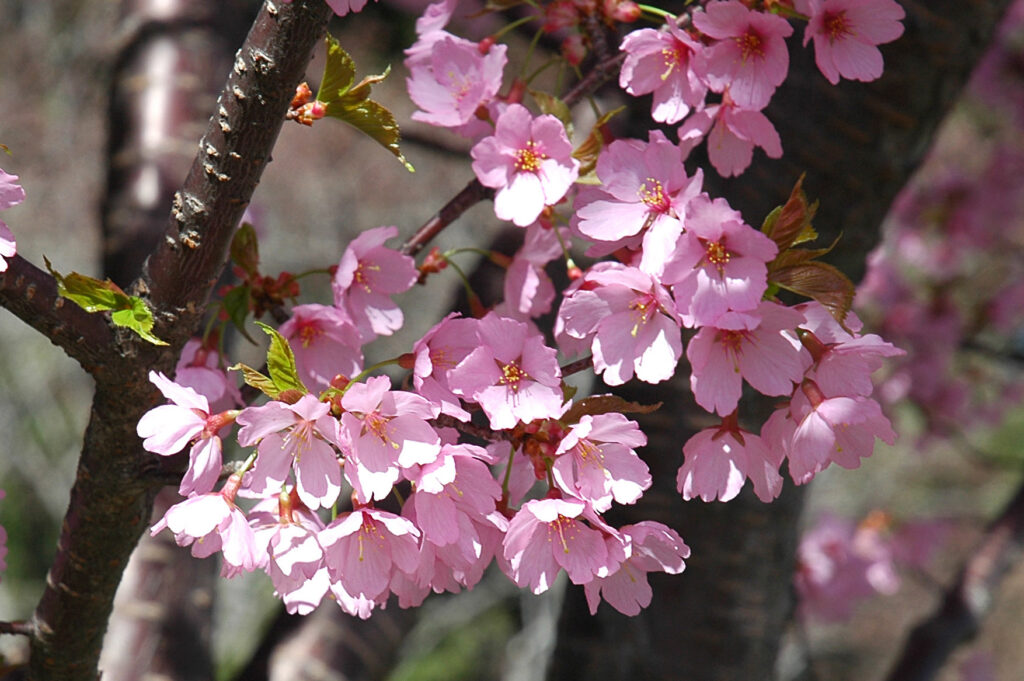
Prunus ‘Dream Catcher’, an Arboretum introduction, in full bloom. Photo courtesy of the U.S. National Arboretum.
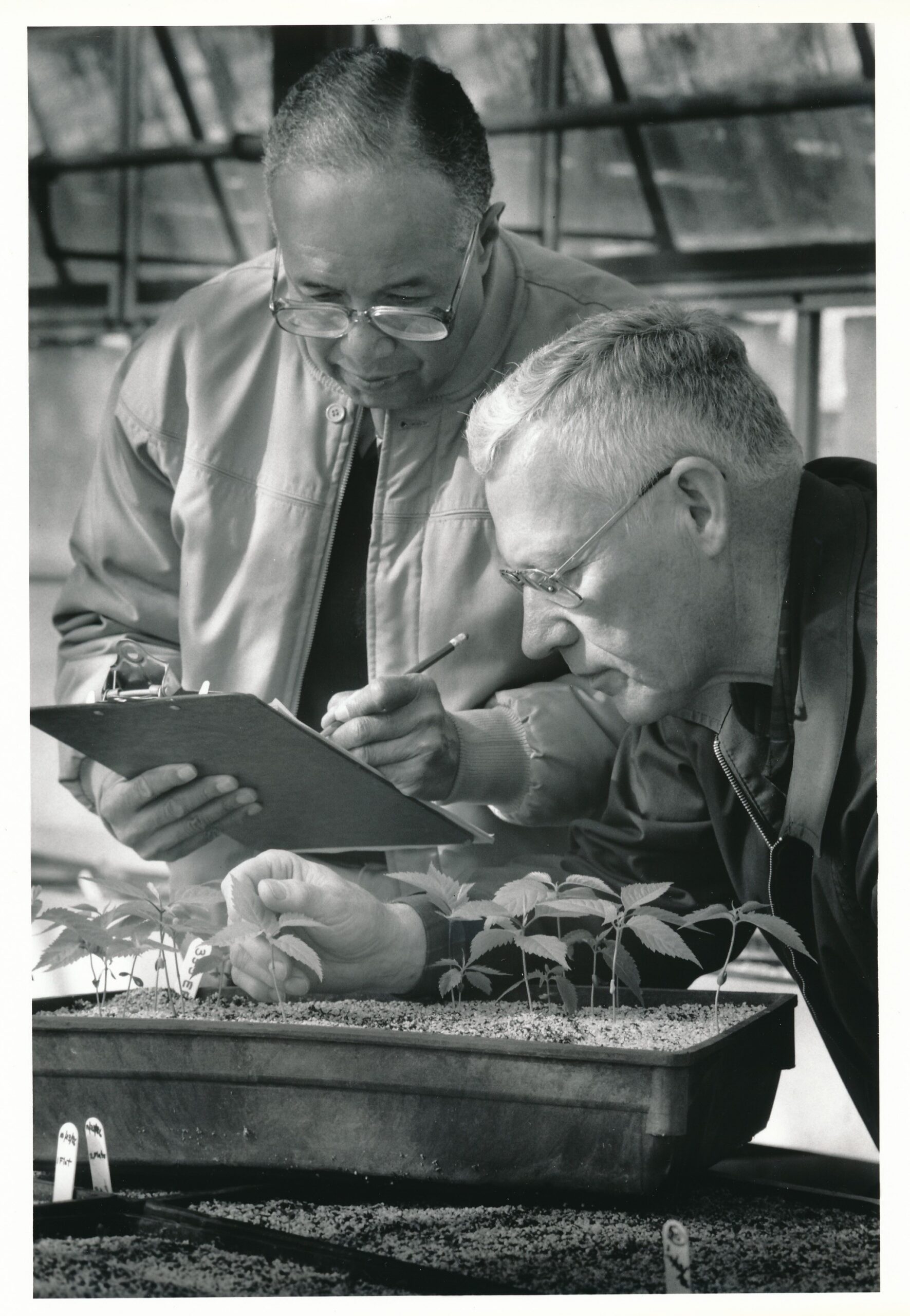
Roland Jefferson (left) and Donald Egolf (right) transformed the National Arboretum’s flowering cherry program into a world-class center for breeding genetic preservation. Photo courtesy of the U.S. National Arboretum.
For decades, the Arboretum has maintained one of the largest and most significant cherry collections in the world — with more than 1,500 genetically diverse trees. Some are squat and wide. Others are tall and narrow. There are weeping varieties with branches that drape like curtains to the ground. Bloom time brings an eye-popping array of blossoms, ranging from delicate single petals to dense, ruffled, multi-petaled clusters in colors from pure cloud white to deep, vibrant pink. The Arboretum’s horticulturists and scientists preserve these unique genetic resources, keeping them safe and available for research and breeding.
The National Arboretum’s flowering cherry breeding and preservation program is just one example of the high-impact scientific research conducted here. Arboretum scientists work to develop improved varieties of shrubs, trees, and turfgrasses to support the nursery industry. The work helps ensure that future generations can continue to enjoy the beauty of flowering cherries and other beloved plants — not only in Washington, D.C., but in communities across the country.
Much of the Arboretum’s scientific stewardship of flowering cherries was shaped in the 1980s through the collaboration between research geneticist Dr. Donald Egolf, who led the Arboretum’s shrub-breeding research program, and botanist Roland Jefferson. Egolf’s breeding expertise, combined with Jefferson’s collecting expeditions abroad and propagation work, expanded the Arboretum’s flowering cherry collection and strengthened its genetic diversity. Their efforts also helped position the Arboretum as a global player in ornamental cherry research.
For decades, the Arboretum’s cherry breeding program prioritized trees that are as structurally sound as they are visually striking. Researchers evaluate and select for features such as earlier bloom times, larger petals, and distinctive blossom colors. Plant geneticist Dr. Margaret Pooler built on this foundation in recent years, using modern genetics to enhance aesthetic traits, disease resistance, and environmental stress tolerance in flowering cherry, crapemyrtle, and redbud trees. This work directly supports plant nurseries and provides communities nationwide with trees better suited to thrive in today’s landscapes.
Arboretum scientists have selected and released four flowering cherry tree cultivars into the American nursery industry. The rigorous selection, propagation, and trial process may take 15 years or more before a new tree is considered ready for the trade.
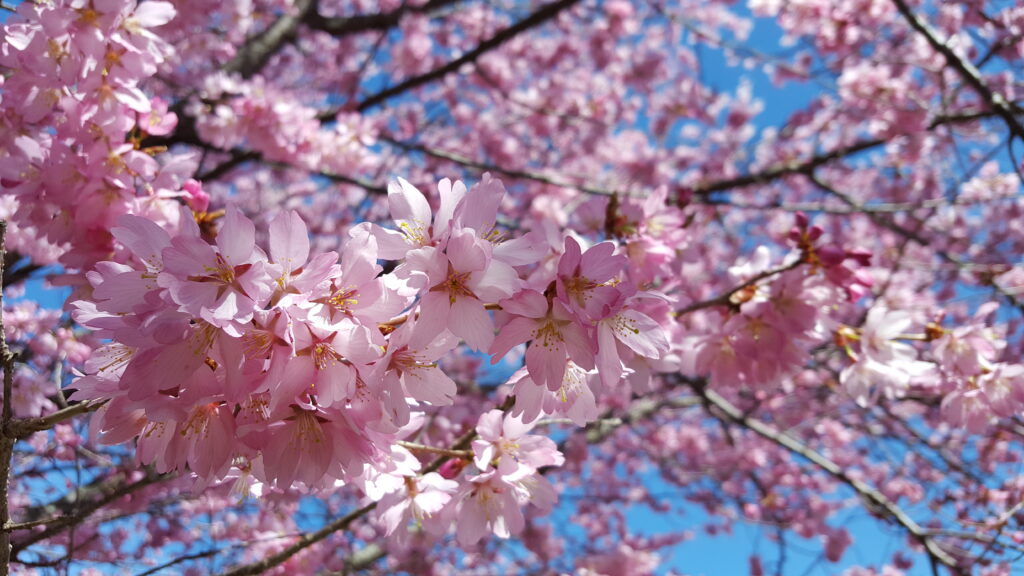
Prunus ‘Dream Catcher’
The first cultivar introduced from the Arboretum’s flowering cherry program in 1999, it features large, light-pink, single blossoms in early spring. Its initial upright, vase-shaped form gradually develops a broader, more rounded crown at maturity.
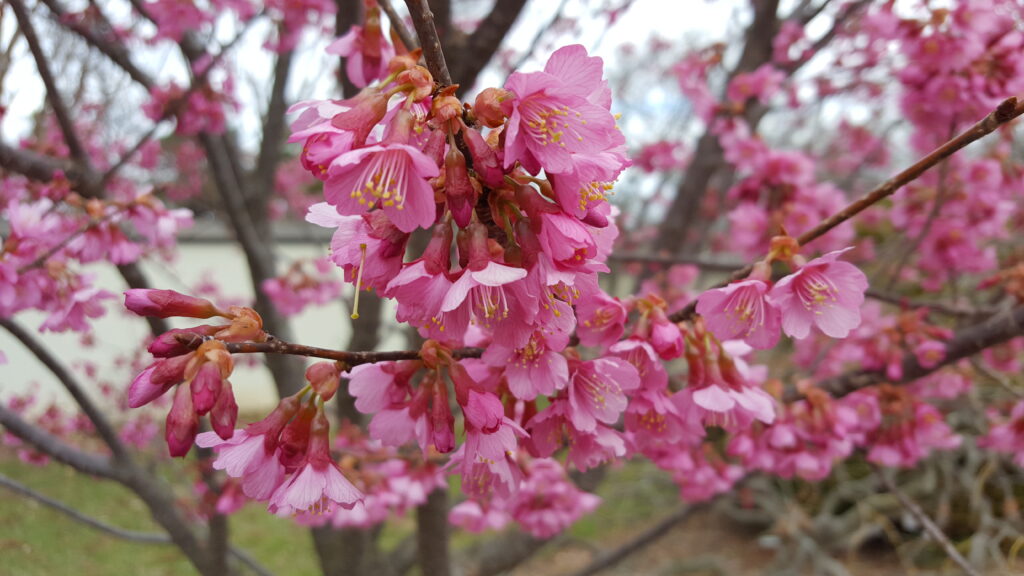
Prunus ×incam ‘First Lady’
An upright, deep-rose pink flowering hybrid. This early bloomer, officially released by the Arboretum in 2003, was selected for its cold-hardiness.
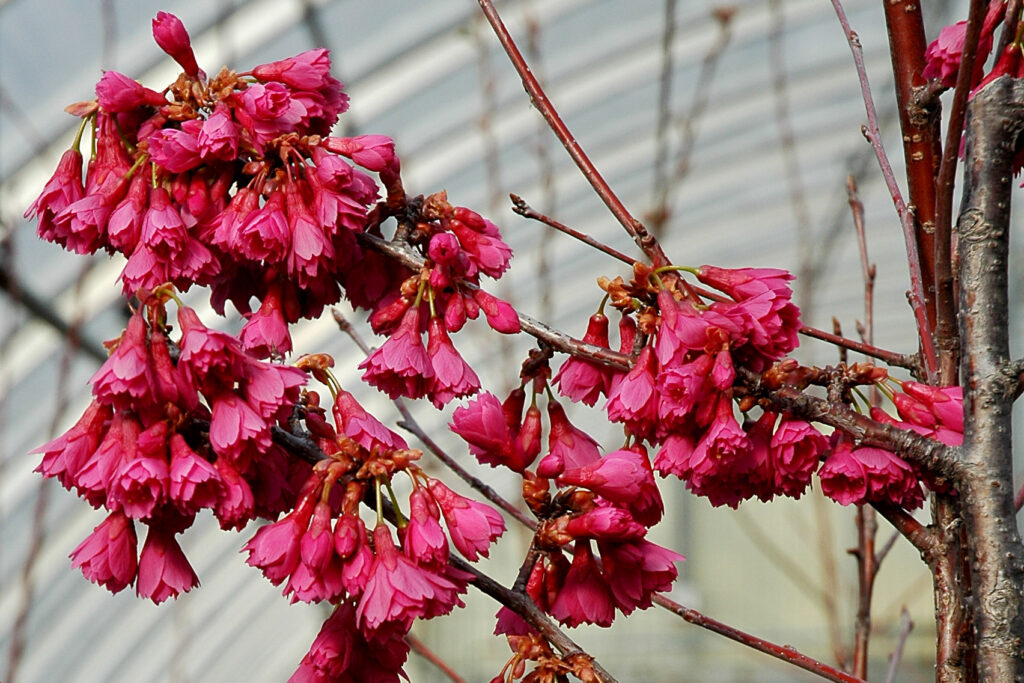
Prunus campanulata ‘Abigail Adams’
Features rare dark pink, semi-double flowers. It was released in 2013 primarily to make this genetic resource available to growers and breeders, particularly for developing cherry trees suitable for warmer climates.
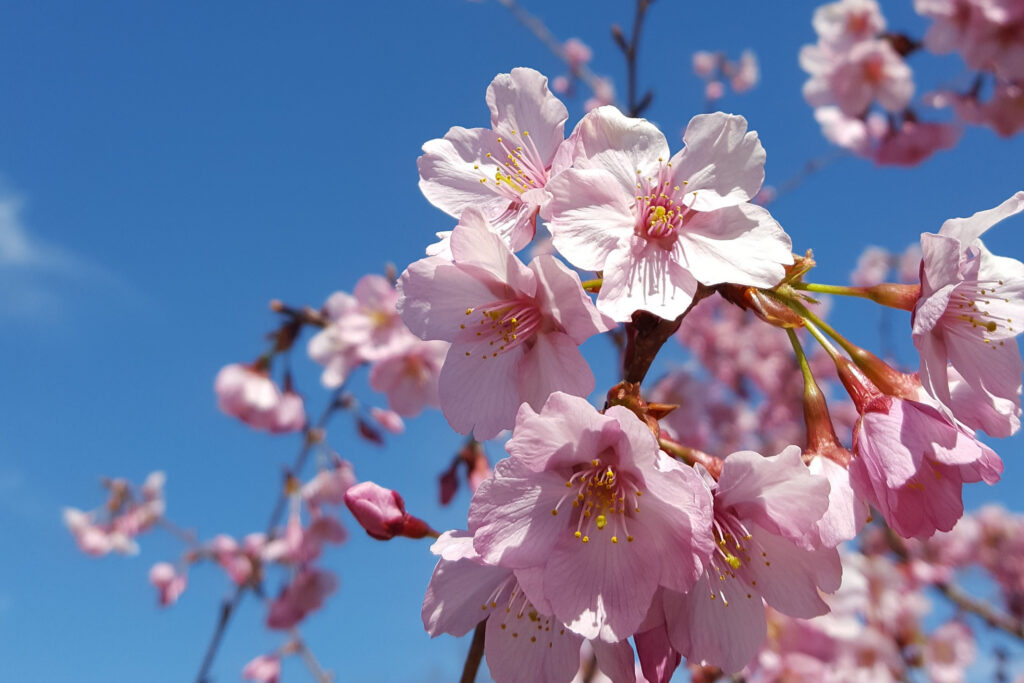
Prunus ‘Helen Taft’
Named for First Lady Helen Taft, who championed the original 1912 cherry plantings at the Tidal Basin. A clone of a tree she planted at the historic event was crossed with a Taiwan cherry to create this hybrid. This early bloomer features large, pale-pink flowers and tolerates warmer Southern climates. It was released in 2012.
SHAPING AMERICAN LANDSCAPES: AZALEAS
Each spring, Mount Hamilton at the U.S. National Arboretum erupts into a sweeping tapestry of color. Azalea shrubs stud the hillside with flowers bursting in pinks and purples among shocks of light yellow and snow white. The National Arboretum’s Azalea Collections provide a breathtaking display — but behind the blooms are decades of research that shaped American horticulture.
In the 1930s, the National Arboretum’s first director, Benjamin Y. Morrison, set out to solve a practical problem: how to expand the range of large-flowered azaleas available to American gardeners in colder climates like Washington, D.C.
Azaleas belong to the genus Rhododendron in the broader heath family (Ericaceae). Many of the popular varieties with large flowers that thrived in the southern United States struggled to survive winters north of Virginia. Morrison believed beauty and hardiness could coexist. He launched an ambitious breeding program that ultimately transformed the nursery industry — and America’s landscapes.
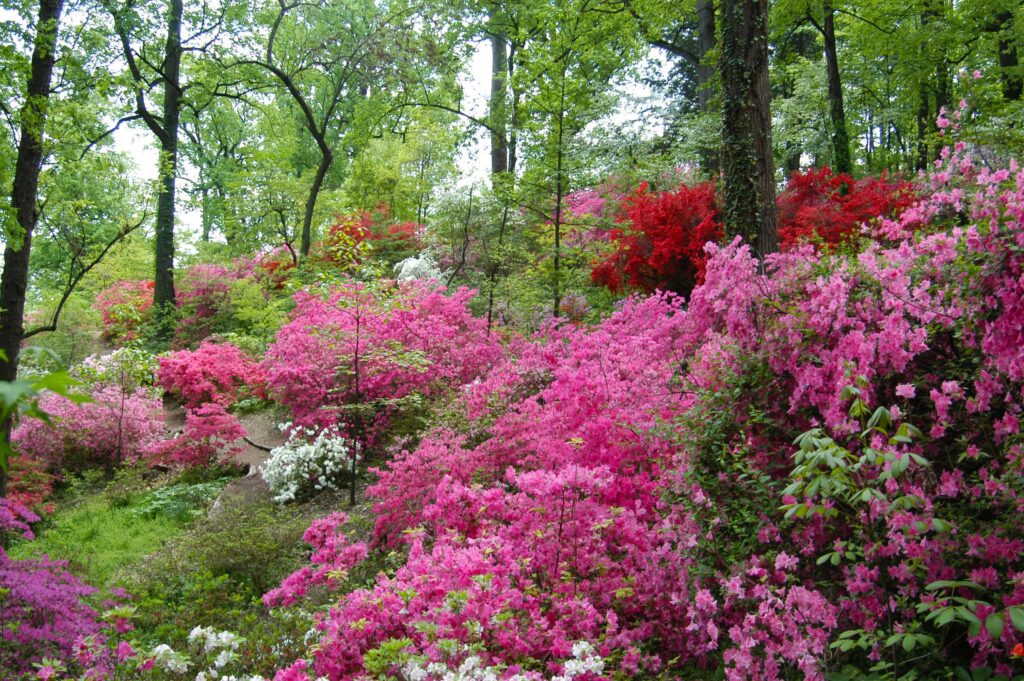
Azalea Collections hillside in full bloom. Photo courtesy of the U.S. National Arboretum.
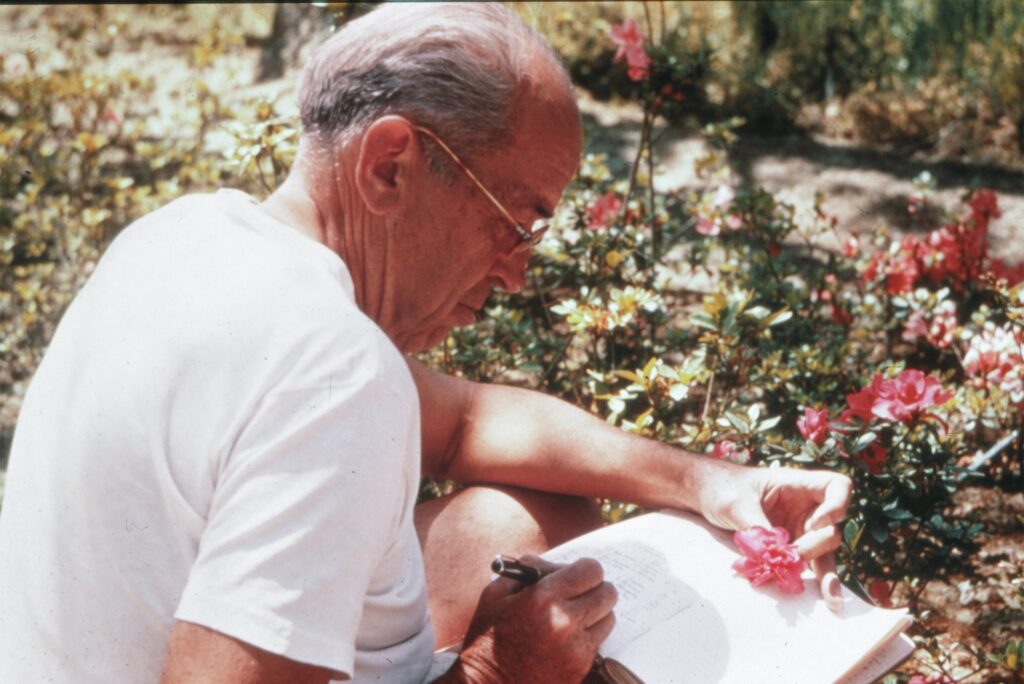
Benjamin Y. Morrison, the National Arboretum’s first director, began the azalea hybridizing program in the late 1920’s. Photo courtesy of the U.S. National Arboretum.
Over time, the program produced 454 named Glenn Dale hybrid azaleas — a remarkable achievement in ornamental plant breeding. Carefully bred from diverse hybrids and Asian species, they featured larger blooms and expanded colors beyond what had been previously available in cold-hardy azaleas. The Glenn Dale azaleas opened new possibilities for gardeners across the Mid-Atlantic and beyond. They now inspire gardeners and support nurseries throughout the region. These plants are proof that the research happening behind the scenes at the National Arboretum is about much more than flowers — it’s about offering a wide array of plants that can transform American gardens.
The Azalea Collections quickly became one of the Arboretum’s defining features. These striking blooms spurred the National Arboretum to open its gates to the public on select weekends every spring beginning in 1949. Over the next decade, the National Arboretum continued to develop its research collections with the added purpose of public education and enjoyment. Visitors could finally see firsthand how federal plant research is translated into living landscapes. Today, the azaleas are a highlight of the Arboretum’s blooming calendar, drawing families, photographers, gardeners, and plant lovers each spring. Peak bloom can vary due to weather and variety. Fortunately, the wide array of azaleas includes later-flowering varieties that stretch the impressive show into June.
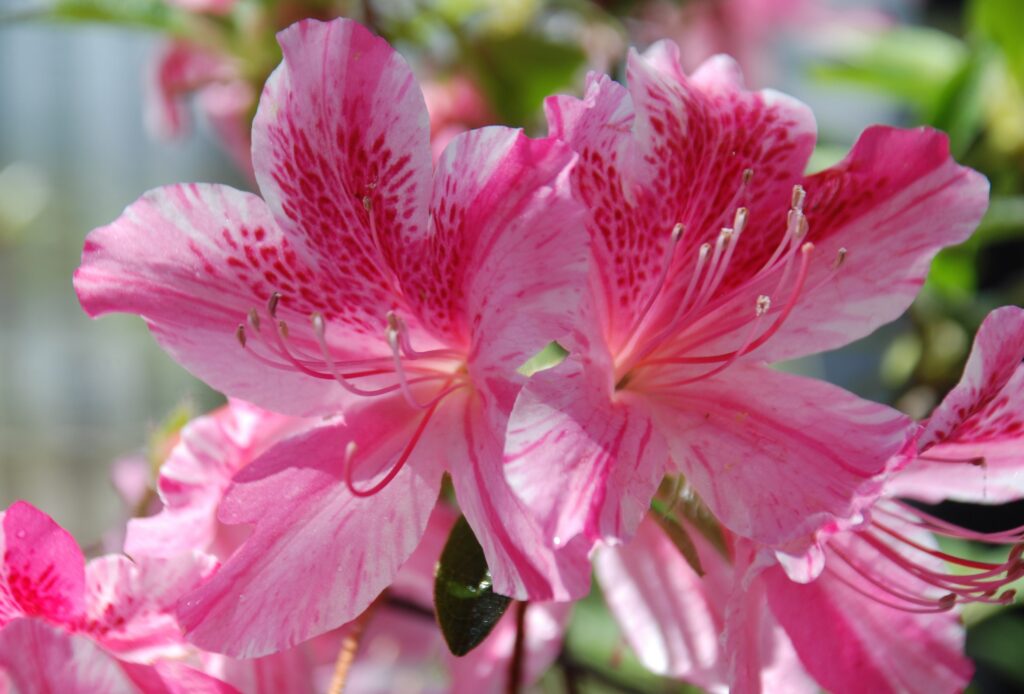
Rhododendron ‘Pied Piper’
A compact shrub with white blooms that are flushed with pale amaranth pink and streaked with heavy magenta stripes and flakes.
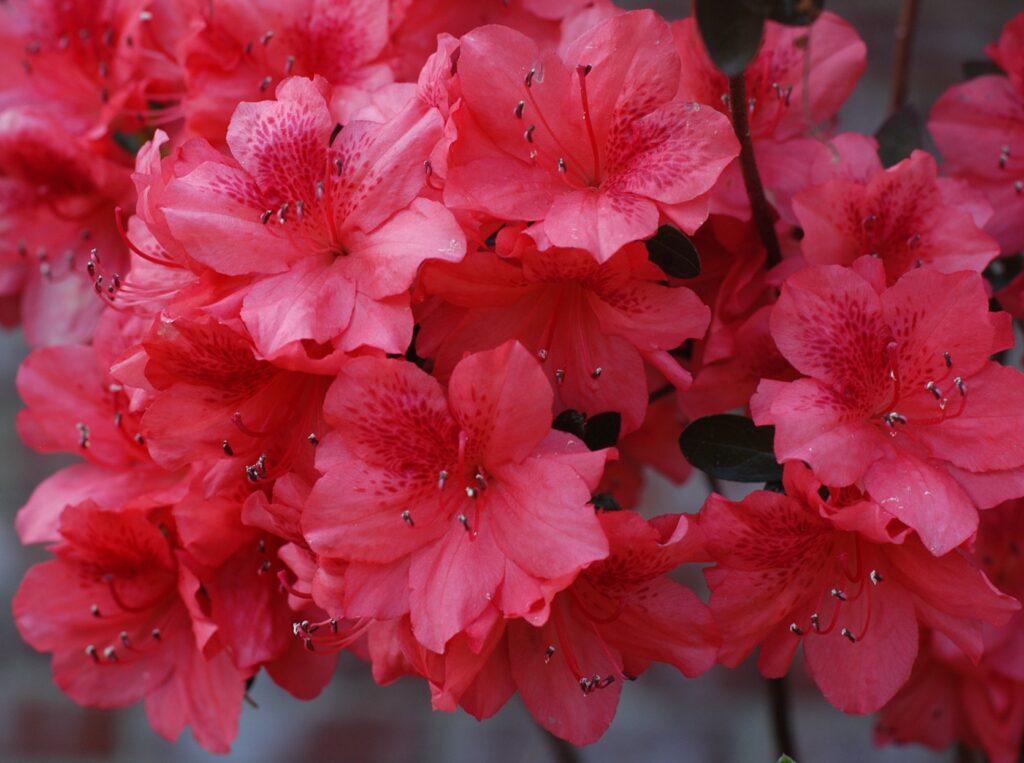
Rhododendron ‘Fashion’
Vivid salmon-orange to red flowers feature one set of petals inside another, creating the appearance of double flowers. This popular Glen Dale hybrid blooms heavily in spring and often reblooms in fall.
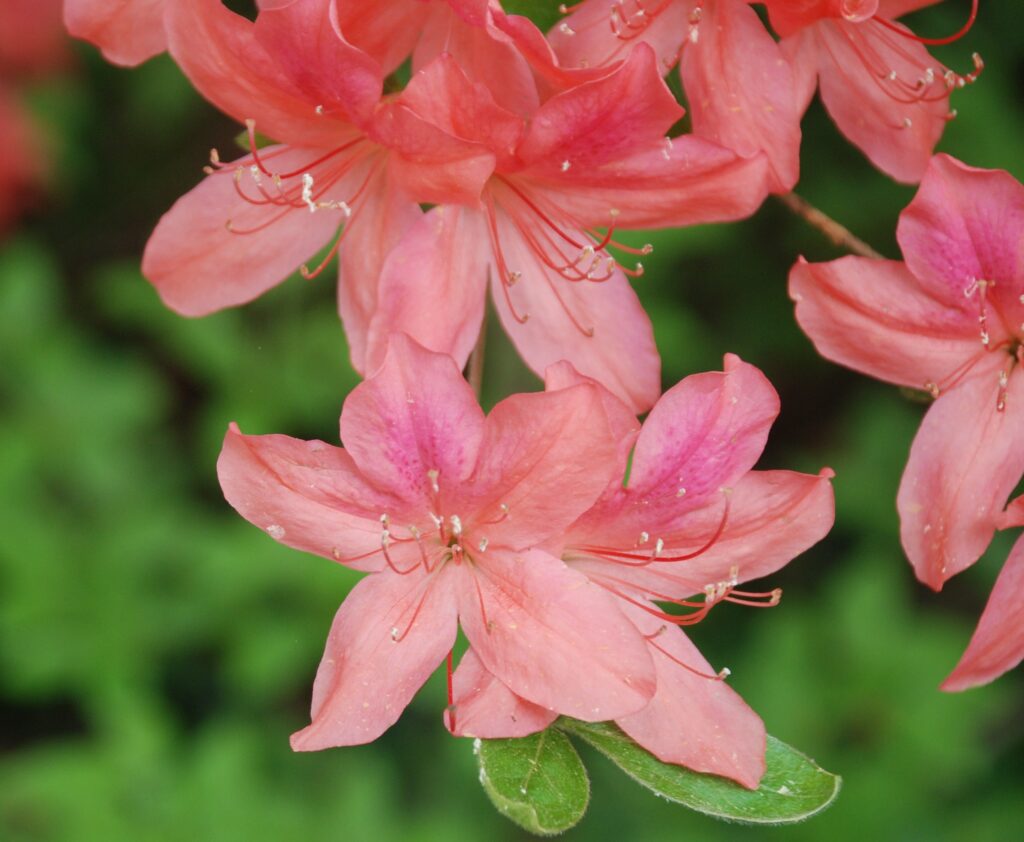
Rhododendron ‘Ambrosia’
An early-spring bloomer with interesting salmon-pink to light orange-yellow flowers.
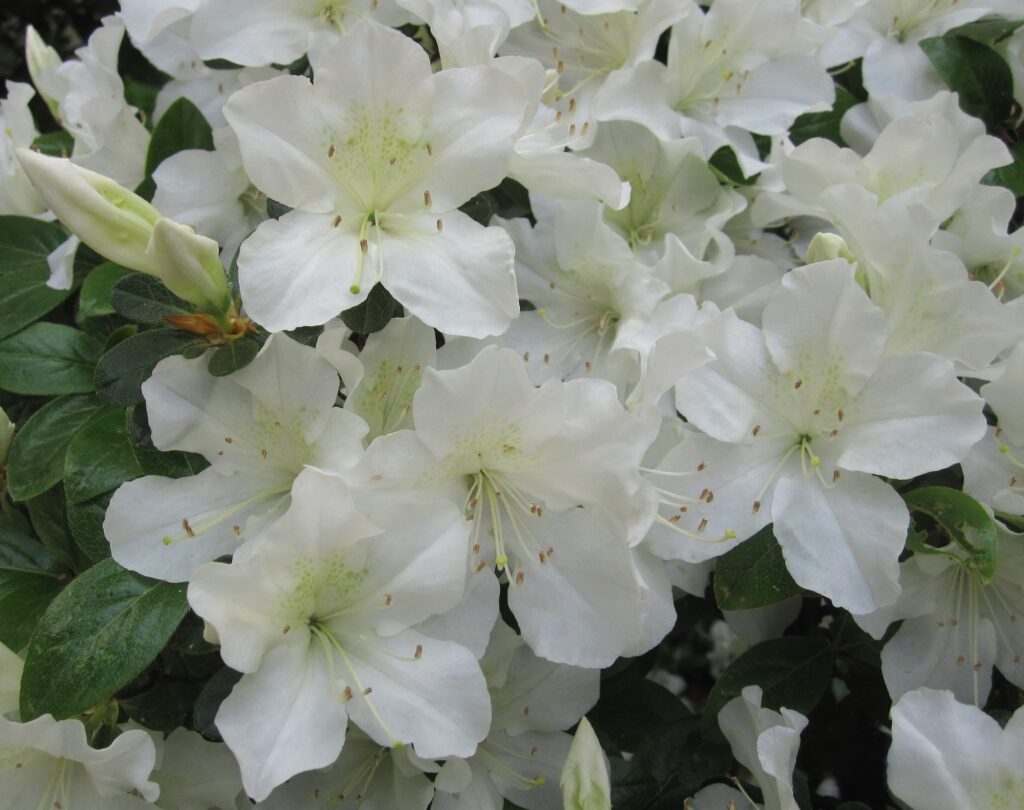
Rhododendron ‘Glacier’
A compact shrub with white blooms that are flushed with pale amaranth pink and streaked with heavy magenta stripes and flakes.
Azalea introduction photos courtesy of the U.S. National Arboretum.
BRIDGING CULTURES THROUGH BONSAI
The National Bonsai & Penjing Museum is a living tribute to the history and beauty of the ancient arts of bonsai and penjing. This world of meticulously sculpted miniature trees — some centuries old — is tucked within the core of the U.S. National Arboretum. Visitors travel through a series of garden pavilions intended for reflection as much as display.
USDA plant explorer Dr. John Creech had the idea of building a national bonsai collection years before he was appointed director of the National Arboretum in 1973. His ties to Japan and bonsai masters there and in the U.S. enabled him to rally both Japanese and American support to bring the idea to life. As part of the United States Bicentennial celebration, 53 bonsai arrived from Japan as a gift of friendship to the American people. Those trees became the foundation of the National Bonsai & Penjing Museum at the U.S. National Arboretum.
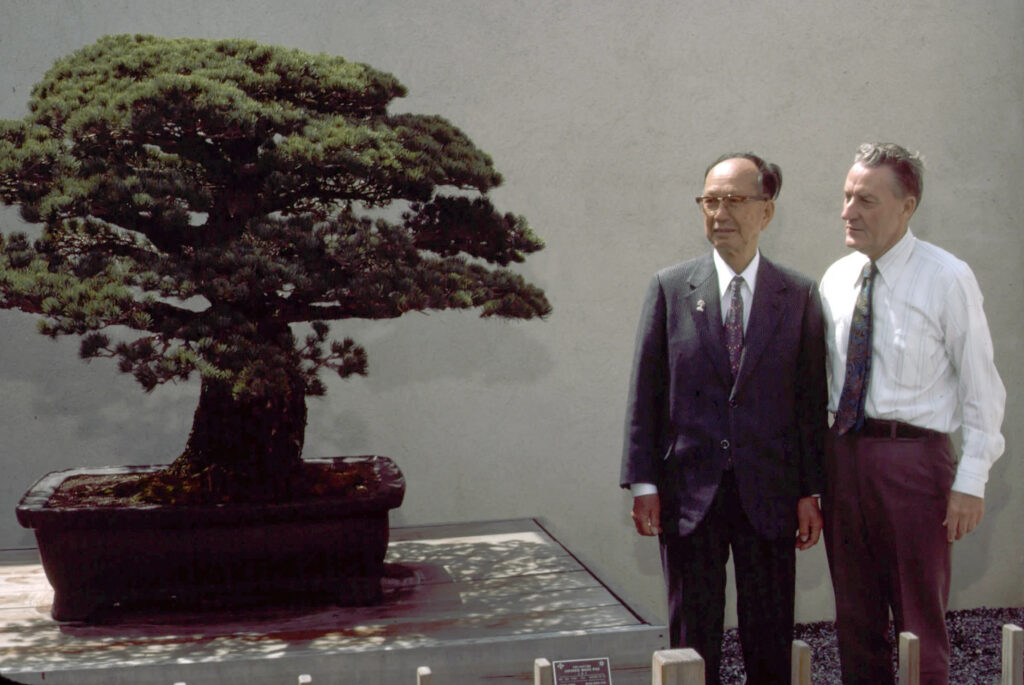
Masaru Yamaki (left) and National Arboretum Director Dr. John Creech (right) admire the Yamaki pine in 1979, courtesy of the U.S. National Arboretum.
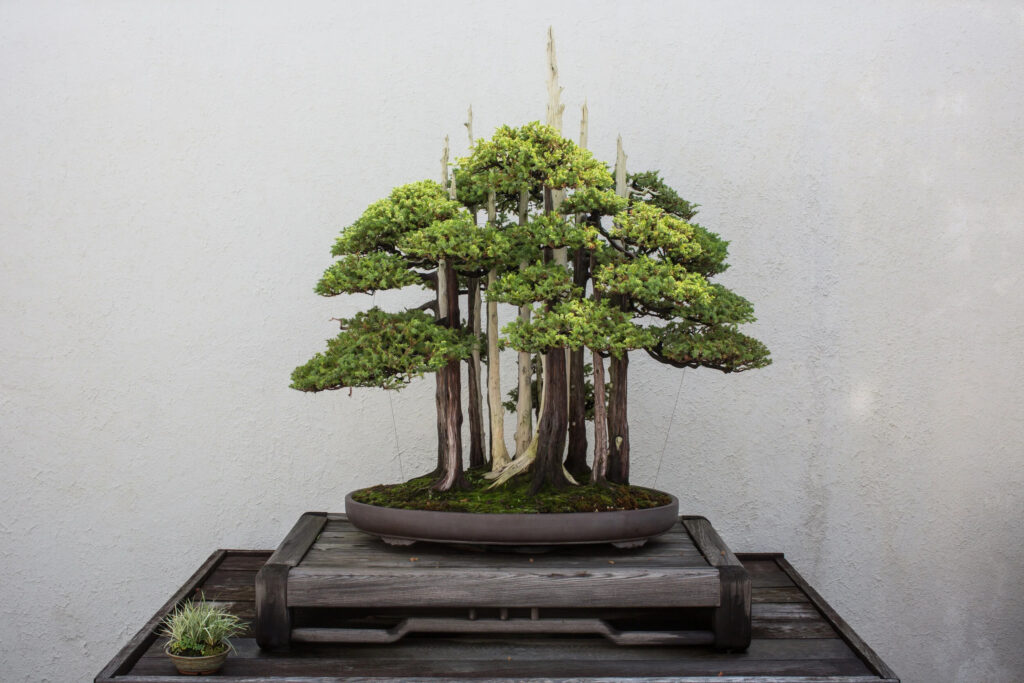
American bonsai master John Naka created this Chinese juniper forest named “Goshin” with 11 trees — one for each of his grandchildren. Photo by Stephen Voss.
Today, the National Bonsai & Penjing Museum stands as one of the most comprehensive public bonsai collections outside of Asia. It tells a global story shaped over centuries through its Chinese, Japanese, and North American pavilions. Each reflects a distinct tradition. Penjing is the ancient Chinese art, dating back 2,000 years, of creating miniature, naturalistic landscapes, often featuring rocks and water. Bonsai is the Japanese adaptation, focused on formal, stylized individual trees. In addition to the bonsai and Chinese penjing displays, the Museum showcases the companion art forms of viewing stones, Chinese scholars’ rocks, kusamono (potted grasses and wildflowers), and, on occasion, ikebana (Japanese flower arrangements).
The Museum has expanded into the vibrant place it is today thanks to the dedication of numerous National Arboretum directors, curators, apprentices, and volunteers, as well as support from private philanthropy. The nonprofit National Bonsai Foundation (NBF) was essential in building and maintaining the Museum. From 1982 to 2025, NBF provided planning, financial, and programming support while fostering international goodwill and deep respect for the art of bonsai. Friends of the National Arboretum is honored to carry forward NBF’s legacy of supporting the Museum and promoting the art of bonsai.
The Museum’s history reflects what is possible when public institutions and private partners work together. Not only are extraordinary trees cultivated, but enduring connections across cultures and generations also blossom under this partnership.
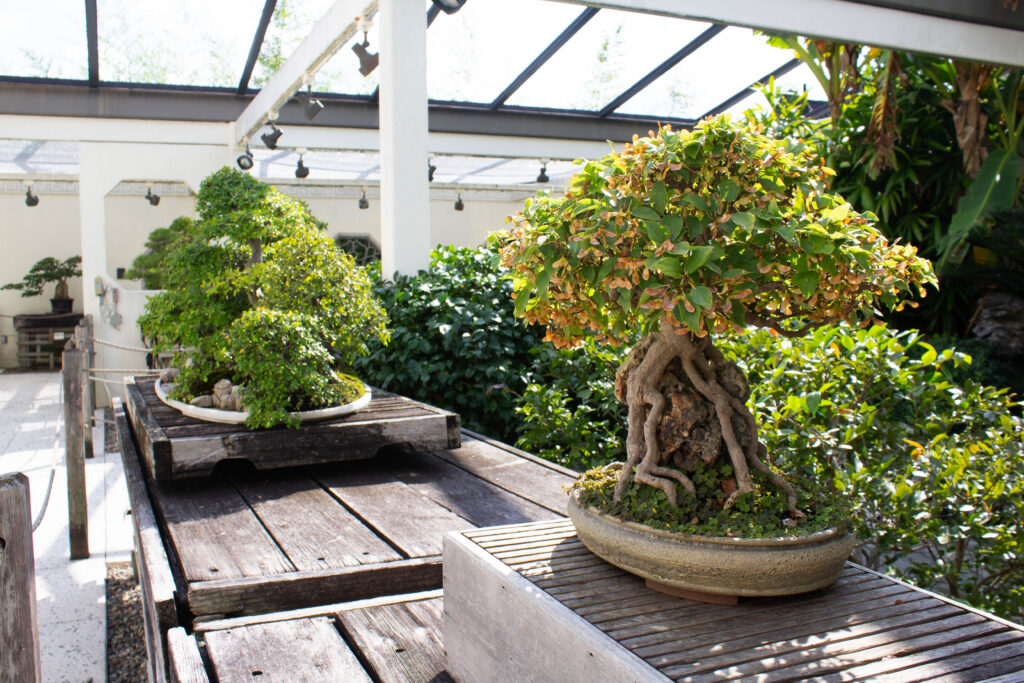
Chinese Pavilion
This pavilion features penjing, the ancient art form that preceded Japanese bonsai. Trees are arranged in compositions that often evoke entire landscapes, blending stone, water, and plant material to suggest mountains, forests, and natural scenes in miniature.
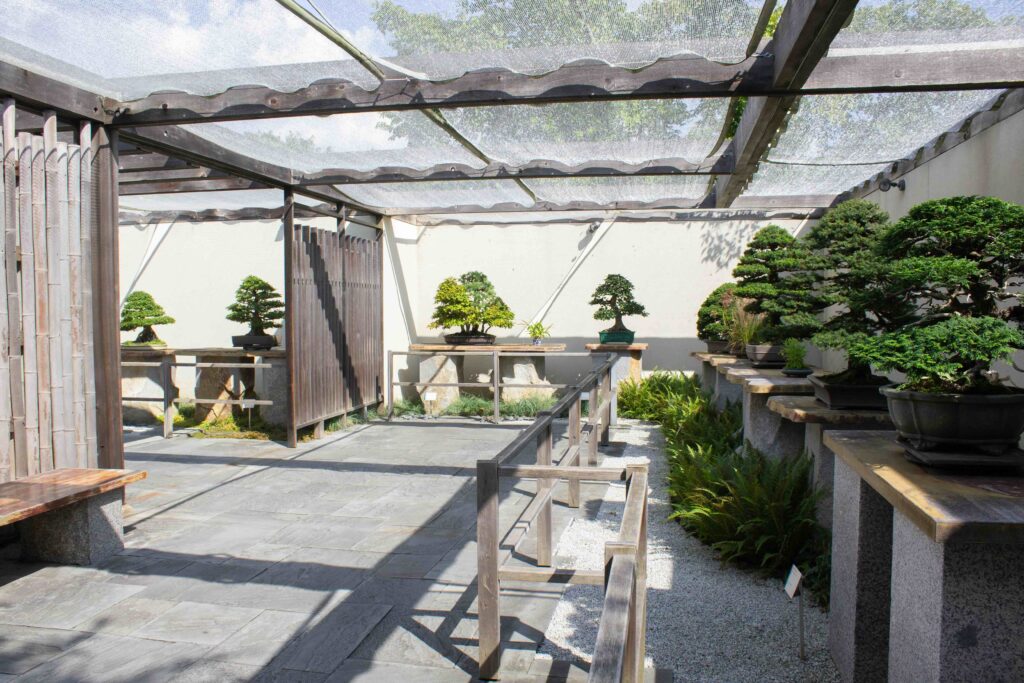
Japanese Pavilion
Anchored by bonsai from the original 1976 gift, this pavilion includes masterpieces that have been carefully trained for generations. These trees embody balance, age, and harmony. The collection’s arguably most revered specimen, due to its long and storied history, is the Yamaki pine, also known as the “Peace Tree.” This Japanese white pine cultivar (Pinus parviflora ‘Miyajima’) survived the atomic bombing of Hiroshima in 1945 and celebrated its 400th year in training in 2025.
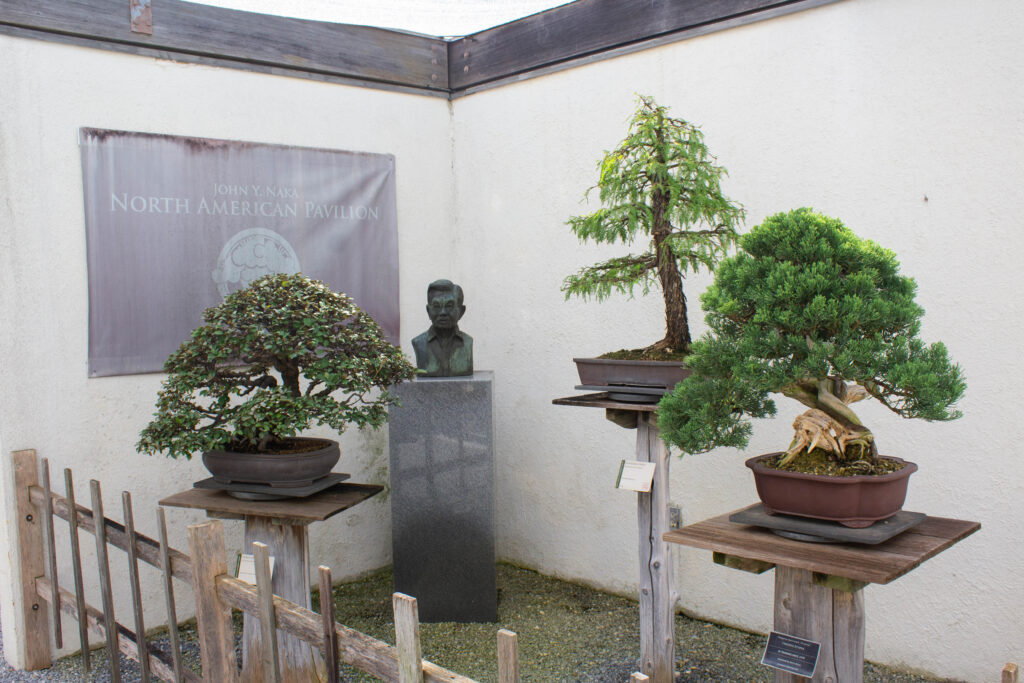
North American Pavilion
This space celebrates bonsai created in the United States and Canada from both native and non-native species. Bald cypress, juniper, maple, and flowering species are transformed through artistic vision. Some bonsai are created from U.S. National Arboretum plant introductions, which connects horticultural research and plant breeding with artistic practice.
WATERSHED MOMENT
Visitors to the U.S. National Arboretum often focus on the trees, plants, and sweeping landscapes. But the water that flows through the Arboretum also tells an important story about protecting watershed health.
That story begins with rain — or water of any form — moving across rooftops, streets, and neighborhoods throughout Washington, D.C. The stormwater picks up sediment, trash, motor oil, and other toxins along the way. Much of that mix swirls into a network of sewer drains that in turn flow into the National Arboretum’s Springhouse Run stream.
Springhouse Run drains more than 100 acres of surrounding urban neighborhoods. For decades, the stream couldn’t run its natural course. It was routed into a cement-sided ditch that rapidly funneled polluted urban stormwater into the Anacostia River watershed. Ultimately, this water entered the Chesapeake Bay, the largest estuary in the United States.
Today, Springhouse Run tells a different story. In 2018, a major restoration project transformed the unhealthy channel into a meandering stream surrounded by thriving wetlands. The project was a collaborative effort by the National Arboretum, the D.C. Department of Energy and Environment (DOEE), and FONA, which mobilized volunteers and provided critical secondary funding. It reconnected nearly 1,800 feet of Springhouse Run to its natural floodplain. Gentle bends, pools, and riffles now slow the stormwater and allow it to spread across the landscape.

The cement-sided ditch that previously directed Springhouse Run was removed in 2016. The stream was reconstructed to include a series of pools, bends, and riffles that now slow the stormwater and allow it to spread across the landscape.
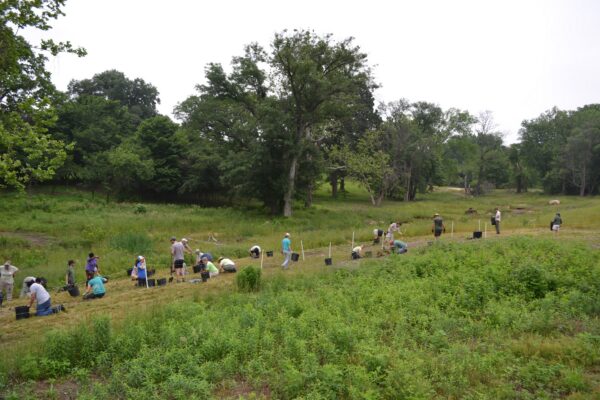
National Arboretum staff and FONA volunteers planted over 30,000 native plants and trees along Springhouse Run as part of this restoration project.
Native plants are central to this transformation. Arboretum staff and FONA volunteers planted more than 30,000 native plants and trees along the streambeds. Deep-rooted grasses, shrubs, and wetland plants stabilize the streambank. They also clean the water, capturing sediment and filtering pollutants carried in runoff. As water moves through the restored floodplain, it percolates through underground passages, which cool it. Monitoring has shown that water entering the stream during summer storms at around 80 degrees Fahrenheit can leave restored spring areas close to 68 degrees Fahrenheit.
Perhaps the clearest sign of the stream’s recovery is the wildlife returning to it. Native river herring have found their way upstream from the Anacostia. Frogs, turtles, and birds have settled in. North American beavers are busy building dams, signifying another important step in the restoration.
While visitors are treated to a tranquil view, the impact of the Springhouse Run restoration reaches far beyond the Arboretum’s gates. Every drop of water that slows, cools, and clears the stream contributes to the health of the Anacostia River and the Chesapeake Bay watershed. This restoration teaches us how thoughtful landscape stewardship can protect ecosystems and communities alike.
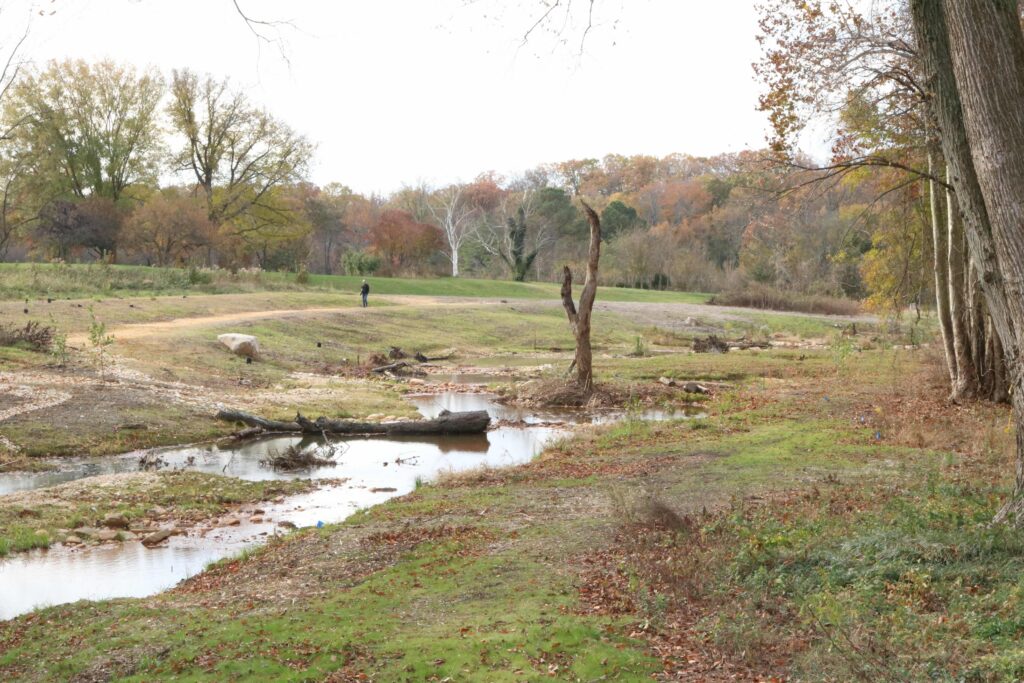
A view of Springhouse Run during the fall of 2017, after stream reconstruction was completed and plantings began.
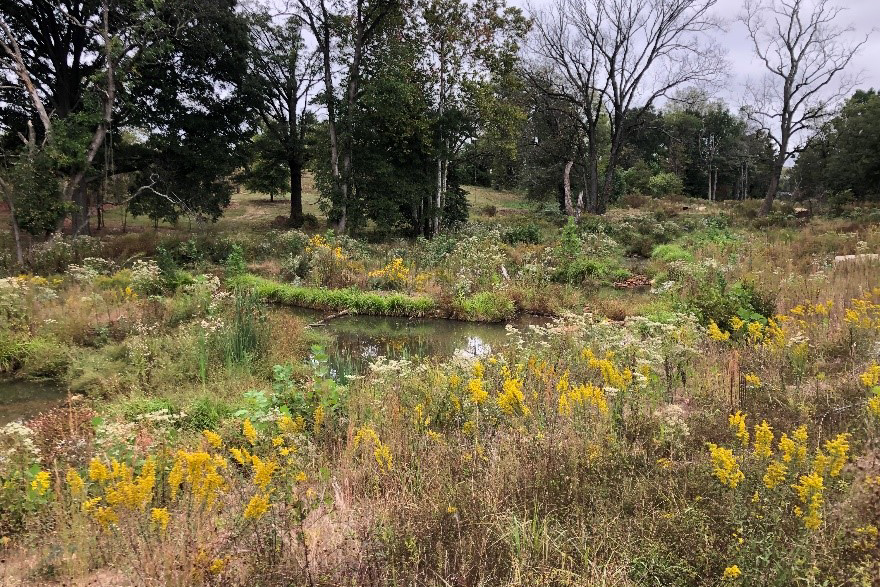
Native plants planted by Arboretum staff and FONA volunteers beginning to bloom and flourish in 2019. Photo courtesy of the U.S. National Arboretum.
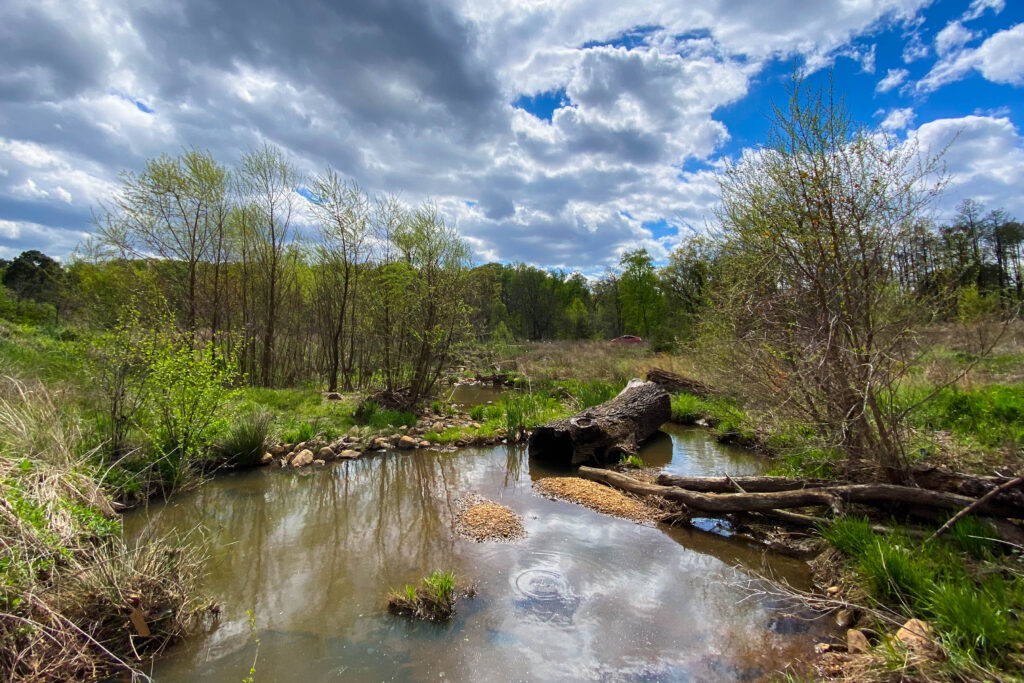
Trees planted by Arboretum staff and FONA volunteers growing tall and strong, as seen from this image from 2021.